Showing posts with label Romance. Show all posts

Monday, March 4, 2019

Amber and Dusk: A Beautifully Written Tale of Romance, Rebellion, and Intrigue

Book Review


Title: Amber and Dusk
Author: Lyra Selene
Genre: YA, Fantasy, Romance, Dystopian

Summary

Although she is an abandoned orphan in the Dusklands at the outer edge of the Amber Empire, Sylvie is born with a “legacy”—a gift of magic. She can spin elaborate illusions, fantasies of her own creation. Knowing that only those with noble blood can wield magic, Sylvie treks to the Amber City to claim her rightful spot in Empress Severine’s court. She hopes to find a place to belong. Instead, she’s thrust into a dangerous game of intrigue and politics.

Ragged and poor, no one takes Sylvie seriously, least of all the Empress. But Severine is intrigued by Sylvie’s power. She offers her courtiers a wager: if Sylvie can polish her legacy by Carrousel, her allies will gain favor and Sylvie will receive position in the court. A handsome nobleman named Lord Sunder with the unnerving legacy of causing pain agrees to sponsor Sylvie, but wagers against her. With no allies, no upbringing, and no idea what she’s gotten herself into Sylvie—newly renamed Mirage—will have to use all her powers to outwit her enemies and beat them at their own game.

Review

On the one hand, Amber and Dusk is not a particularly ground-breaking novel. All the major tropes of the YA/ Fantasy/ Romance/ Dystopian genre are here in full force. Determined heroine with more power than she realizes? Check. Mysterious past that becomes important in the third act? Check. Love triangle? Check. Decadent and cruel empire with a rebellion growing in the wings? Check. If you know the genre, you’ll recognize many of the same elements at work here.

And that’s okay, because Amber and Dusk does them well. This a solid, well-crafted, and beautiful story. I felt like the Amber Empire was a real place. Glamorous and ugly all at once, it’s a land I could believe in, a land I could fall in love with, a land I wanted to fight for. The author’s language is lush and vivid. Lyra Selene paints pictures with prose and beautifully captures the emotion of her characters.

I liked Sylvie/ Mirage right from the beginning. She is kind, loyal, and passionate. She risks much in order to follow her dream. But Sylvie’s ambitions have a dark side. She can be impulsive, irresponsible, entitled. Characters question her intentions. Although Sylvie is basically good, the idea that she can be corrupted is enticing to me—especially as her power grows.

Most fantasy stories begin with our hero’s terrible and/ or boring childhood. Amber and Dusk thankfully skips most of this and begins right as Sylvie is about to enter the Amber City. This helps the pacing quite a bit, as it gets Sylvie into the court relatively quickly. Once she’s in court, the plot kicks into gear. Sylvie makes friends and enemies, discovers secrets, and is forced to re-evaluate what she wants in life. There’s also a bit of romance. The romance adds a nice spice to the story, but never takes it over completely.

I started this story while riding on an airplane. I couldn’t put it down and finished the last few pages while waiting for my luggage. The ending was a tad bit muddled, but still satisfying. Although the story hints at a sequel, it is a self-contained book. You can stop right here or continue on for more.

I, personally, want more.

Friday, September 14, 2018

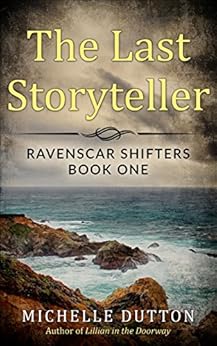
The Last Storyteller—A Short Story That Wanted to Be a Novel


Title: The Last Storyteller
Author: Michelle Dutton (Michelle Knowlden)
Genre: Sweet Romance, Paranormal Romance

Summary

In the small town of Ravenscar, men and women turn into birds, and storytellers keep their people’s secret history alive. Miri was born to be a storyteller, but she abandoned the role and left Ravenscar after her sister’s betrayal and a painful break-up with her boyfriend, Trey. Fourteen years later, Miri returns to Ravenscar for her sister’s funeral. Trey is waiting. As Miri confronts the truth of the past, she struggles to understand who she is and what her future holds.

Review

There is a very dreamy, almost poetic quality to “The Last Story-Teller.” The town of Ravenscar seems like a place forgotten to the world: a little sad, a little run down, but full of its own charm, with characters you can root for. I liked Miri and I found I could relate to her journey. Coming home with a new perspective allows her to understand her past better; at the same time, being home reaffirms who she is. I could also relate to Miri as a storyteller and her struggles as an artist:

“In carefully collecting every word, I lost the sense of weaving only certain threads and in sharing the right story. In collecting every emotion, I lost the skill of only keeping the feelings needed for my listeners. In being so analytical about every detail, I lost the reason and art of telling.”

But the problem I had was that the story felt too contracted, too rushed. I had to re-read the opening chapter a couple times, because I felt like I was missing key information, such as whether shapeshifting was genetic and which bloodlines could shift into which birds and what the key characteristics of each family was. (This plays an important part in the plot.) Different conflicts were teased, but they were never really developed.

For example, Miri and Trey’s relationship. The two still clearly have feelings for each other, but something happened in the past that tore them apart. I wanted to see the drama of this play out, with Miri slowly uncovering the truth, with both Miri and Trey facing their hurt feelings, with both weighing the risk of heartbreak over the potential for true love. But there’s no time for that. They talk about their break-up early on, and the story moves on to the next problem. One problem is solved, then another, then another, until everyone is happy again.

Ultimately, this story isn’t really about Miri and Trey re-kindling their lost love, or about the mysterious death of Miri’s sister, or about the struggles of family, or about small town life, or even about what it’s like to turn into a bird. It’s about Miri and who she is as a storyteller. On that level, it works. But there were so many other themes that could have been explored, that could have made “The Last Storyteller” a fuller, richer, and more satisfying story. It had the potential to be a wonderful novel, but it gets hampered by its short story size.

Wednesday, August 15, 2018

Book Review: Caraval—a Light, Fluffy Read

Title: Caraval
Author: Stephanie Garbar
Genre: YA Fantasy Romance

Summary

After seven years of dreaming of escaping to the magic and splendor of Caraval, Scarlett Dragna’s wish has finally come true—at precisely the wrong time. Her invitation to the exclusive five-day fair arrives right as she is about to be married to a count she’s never met. Marriage is the only way Scarlett can think of to keep herself and her impetuous sister Donatella safe from their father’s wrath. Donatella, however, has other plans. When her sister seizes the opportunity to visit Caraval, Scarlett has no choice but to follow her into a world where illusion and reality intertwine, where dreams can be purchased at the cost of dark secrets, and where to win the ultimate prize, Scarlett may have to pay the ultimate cost.

Review

I bought the book because it had a strong concept that had a lot of potential. Not only does Scarlett get to visit this carnival of magic, but soon her sister is kidnapped and Scarlett is forced to play a game with the Caraval master to get her back. Why is Scarlett singled out? What sort of game will she be forced to play? How will she overcome the obstacles to emerge the winner?

There are answers, but they are not as satisfying as I would have liked.

Don’t get me wrong. I enjoyed wandering the world of Caraval. It reminds me of a time when I went to Lightning in a Bottle—except that instead of sleeping in tents, you get gorgeous hotel rooms with jade keys and trick doors; instead of putting together the odd outfits with fake fox tails and tiny lights, you get a magical dress that changes based on mood; and instead of rows of booths selling cool clothes and art, you get beautiful shops that will sell you magic potions for the cost of a secret or a few days of your life. Caraval is a place you want to wander around in and enjoy all of its beautiful, quirky assets. That works out, since the actual “game” is rather thin.

I’m sort of a sucker for books about games, but by now I know better than to get my hopes up. Caraval’s game is similar to a scavenger hunt, except that the clues are so vague that virtually anything could be an answer. And anything is—the “answers” Scarlett puts down seem like the author’s poor attempt to justify her riddle. Nor do they matter, as the clues are all given at the beginning and one does not lead to the next. Supposedly other players are desperate to win the game, but they don’t really have personalities or do much after the first clue.

Fortunately, the plot of Caraval doesn’t really revolve around the game but rather Scarlett’s character growth. Torn between fear and love, Scarlett learns to take risks and go after what she most desires. To that extent, the story works. And while I don’t mind a good story about a heroine growing up, I really wish we could have that while also enjoying a high-stakes, action-packed, riddle-solving game.

As a heroine, Scarlett is nice enough, but she does not feel particularly unique. She loves her sister, fears her father, hopes for security, desires love, and describes her emotion in terms of color. “The urgent red of burning coals. The eager greens of new grass buds. The frenzied yellows of a flapping bird’s feathers.” I rather like this language, as it adds a sense of romance and emotion and… well, color. But it does strain at times.

The book fits solidly in the YA Fantasy Romance genre. Yes, there is a love interest and he is an appealing mix of roguish and good-hearted. Since Caraval lasts only five days, it’s a whirlwind affair by necessity—which isn’t really my cup of tea. There just doesn’t seem to be enough time for the characters to get to know each other—and it doesn’t help that the love interest is not what he seems. However, Scarlett never puts this romance above her sister, so she gets points for that.

I liked this book. It was a light, fluffy read, a good book to take to the beach. But it wasn’t a book that sat with me afterward, that made me think or feel or want to re-read it. I could probably nitpick it more, but to what end? Like the magical fair itself, it’s best not to look at Caraval too hard, lest all the fun and magic collapse under heavy scrutiny.

Saturday, December 19, 2015

Book Review: Shatter Me

Title: Shatter Me
Author: Tahereh Mafi
Genre: YA, Science Fiction (Dystopian), Romance
  
Summary

Four walls of an asylum and a small notebook make up Juliette Ferrars' entire world until the day a mysterious boy enters her cell. His name is Adam Kent, and he doesn't seem to remember Juliette--but she remembers him. They went to school together, back when the world was normal: before the food shortages and the nuclear bombs and the iron fist rule of The Reestablishment.

Juliette never fit into the normal world. A touch from her can cause a person to convulse in pain; if she holds on too long, they die. Now Warner, a young but ruthless leader, wants to mold her into a weapon for The Reestablishment. He'll use anything in his power to bend her to his will--including her budding feelings for Adam. It seems Juliette will only ever cause pain to those closest to her. Then Adam tells her a secret that will change everything...

Review

My friend Rita, who writes YA fantasy romances, ardently recommended this book to me. My reaction wasn't quite as passionate. I liked it okay. And I could see it's appeal. The book is beautifully written in a unique style that milks emotion out of every situation--good for romance readers. But the fantasy elements are unoriginal, the setting is vague, and the plot is thin.

Let's start with the good stuff.

Tahereh Mafi writes in a way I haven't seen before, crossing out lines that are too real, too raw, or too embarrassing, like one would do in a journal. But Juliette isn't writing in a journal, though it appears that way at first. This is happening in real time, and the crossed out words represents her self-editing mind.

     "What are you writing?" Cellmate speaks again.

     These words are vomit.

     This shaky pen is my esophagus.

     This sheet of paper is my porcelain bowl.

     "Why won't you answer me?" He's too close too close too close.

     No one is ever close enough.

I can relate to this. I'm always trying to stomp out weird thoughts that pop into my head. It gives me, the reader, a close connection to Juliette. I'm aware of even her subconscious thoughts. At the same time, Tahereh Mafi's blend of metaphor and hyperbole creates an atmosphere of heightened emotion. Every tiny action is supercharged with meaning.

     There are 15,000 feelings of disbelief hole-punched into my heart.


     His eyes are 2 buckets of rainwater: deep, fresh, clear.


     I step backwards and 10,000 tiny particles shatter between us.
How poetic
This unique style caught my interest from the start and kept me reading.

 
It had to, because for the first 50 pages, nothing happened. Juliette sat in her cell with Adam, feeling strongly, but hardly moving or speaking at all. Even after she gets out of the mental institution, she ends up locked with a boy again, for 150 pages this time.

Thank goodness that this boy is Warner, the green-eyed, gorgeous, 19-year-old psychopathic murderer who is obsessed with power, obsessed with Juliette, and obsessed with getting Juliette to accept her power. When I realized that Warner saw Juliette as more than a weapon--that he was actually sort of in love with her--then I began to flip pages quite quickly.

     "Don't you dare hate me so quickly," [Warner] continues. "You might find yourself enjoying this situation a lot more than you anticipated. Lucky for you, I'm willing to be patient." He grins. Leans back. "Though it certainly doesn't hurt that you're so alarmingly beautiful."

I know I'm not supposed to like Warner. Juliette hates him, is absolutely appalled by everything he does, calls him a monster to his face. And yet I sensed a troubled past and a pitiful desperation oozing from Warner's blackened soul. He needs so badly for Juliette to choose him, and this need makes him vulnerable.

At least I'm not the only one!
Was I crazy? Was this some residue of my adolescent longing for the bad boy? Rita assured me that I was, in fact, an astute reader, and that Warner gets a ton more development in the upcoming books. I'm glad. I'd hate to think I was falling for a creepy stalker for no reason.

I mentioned before that Tahereh Mafi makes good use of figurative language, and while this stirs the blood, it makes it very difficult to see what's going on around the characters. In no place is this more apparent than in the setting. I tried and tried to get a clear idea of the landscape, but the vague words left me with an impressionistic blur.

     The general population has been distributed across what's left of the country. Industrial buildings form the spine of the landscape: tall, rectangular metal boxes stuffed full of machinery. Machinery intended to strengthen the army, to strengthen The Reestablishment, to destroy mass quantities of human civilization.

     Carbon/ Tar/ Steel

     Gray/ Black/ Silver

This is what I know about the society Juliette inhabits. Ten years ago, it was pretty much our world. Then the atmosphere became poisonous, the earth stopped providing food, starvation broke out, and The Reestablishment came to power. Since The Reestablishment is evil, they set off nuclear bombs and created orphans and hoarded all the goodies for themselves. For some reason, there aren't any cars left--except when required by the plot.

Juliette's World
Basically, a generic Dystopia. You might as well ignore the setting altogether.

Shatter Me had hints of X-Men right from the start. It's hard not to compare Juliette to Rogue. Initially, I shrugged it off as coincidence and tried to put that comparison out of my mind. But the ending threw all subtlety out the window. It's X-men + YA Dystopia + Romance. The climax had a good deal of action and drama, but by the end of the book, I felt a little underwhelmed.

Rita tells me that the third book is the best of the bunch, that it ties everything up wonderfully. I'm not entirely sure I'll get to reading the other two books, though. Maybe if I get them for Christmas...

Sunday, November 2, 2014

Book Review: Ophelia

Title: Ophelia
Author: Lisa Klein
Genre: YA, Historical Fiction, Romance, Fan Fiction

Summary

A motherless girl, neglected by her father, grows up to become the queen's favorite and catches the eye of the handsome young prince. It would be a fairy tale--if it weren't a tragedy.

Elsinore is a web of deceit, plots, madness, and betrayal, and young Ophelia soon becomes caught in the middle of it. But this maid of flowers isn't as passive and innocent as she seems. As her beloved Hamlet becomes consumed by the thought of vengeance, Ophelia faces a choice. Will she bind herself to her beloved's fate? Or will she steer her own destiny?

Review

William Shakespeare's Hamlet is a tricky play to figure out. So much depends on how you interpret the characters. I, personally, found Ophelia to be obedient, idealized, and boring--right up until she goes crazy and kills herself. But, as Lisa Klein says, "If Ophelia was so dim, what on earth made Hamlet fall in love with her?"

In this reinterpretation, Ophelia is an equal of Hamlet, every bit as capable of witty wordplay and deceit. Lisa Klein makes good use of events leading up to the play and the things that happen "between the scenes" to flesh out her character and twist the plot. Though Hamlet remains essentially mysterious, his feelings toward Ophelia are clear.

Other supporting characters, on the other hand, get less characterization. Laertes, despite being Ophelia's brother, is hardly present. Horatio, an important character, acts stoic and doesn't express much emotion. Queen Gertrude is lovingly portrayed, but a key question--why she married Claudius--remains unanswered.

The world is believable and well-formed. Klein manages to retain the flavor of Shakespeare's language while keeping it understandable to a modern audience. One of my favorite parts came during the courtship phase, when Hamlet and Ophelia banter suggestively like any romantic couple in a Shakespeare comedy.

Now, I don't think I'm giving much away when I say that Ophelia doesn't die. One major hint is the fact that it's written in first person point of view. Also, a quick glance at the prologue reveals that she's alive to receive news of Hamlet's death. While leading up to the tragedy, the story is fun and vibrant, having the full force of Shakespeare's plot behind it. After the tragedy, the story drags.

The last 100 pages introduces new characters, new settings, and new conflicts, but there doesn't seem to be much of a point to any of it. The string of incidents very loosely continues the themes madness and the unfair double standard of men and women. I had an inkling of how Ophelia might get a happy ending, but I had to wait until the epilogue to have it confirmed and the one brief scene just didn't satisfy me.

So basically, if you skip the final 100 pages and read the epilogue, you'll be fine. I think, on the whole, it's an interesting interpretation and a fine companion to Hamlet.

Sunday, October 19, 2014

Short Story Review: Superhero in Disguise

Title: Superhero in Disguise
Author: Kitty Bucholtz
Genre: Romance, Fantasy

Summary

"Finally, a place where I can be myself. No more hiding."

For Tori Lewis a new apartment means having the freedom to live without disguising herself. But when, on Halloween night, a Zorro-costumed stranger rescues her from a purse-snatcher, Tori finds herself falling for him. Love means hiding who she is all over again. Or could this be the start of something more?
Review

"Superhero in Disguise" is primarily a romance with a little superhero stuff tossed in. Now I'm not a huge romance reader, but I do like them every now and then, and this was fun. I started reading and couldn't put it down.

Maybe because it was originally meant as the opening chapters of her novel, but "Unexpected Superhero" seemed a lot more developed than a typical short story. There are hints of Tori's dark past, hints of a world where superheroes are rumored, hints of our masked man's secret fears. None of these play much bearing in the romance, but they did tantalyze me and leave me wanting more.

Sunday, August 17, 2014

Book Review: The Program

Title: The Program
Author: Suzanne Young
Genre: Dystopian Sci-Fi, Romance, YA

Summary

No one knows why teen suicide has suddenly become an epidemic, but with 1 out of every 3 teenagers killing themselves, adults are desperate for a solution. To them, the program seems heaven-sent. By carefully removing all dangerous memories, doctors can ensure a 100% survival rate for teens who finish.

But 17-year-old Sloane Barstow isn't buying it. The people who return from the program are empty, their minds filled with holes, their pasts stolen. Sloane won't risk forgetting her boyfriend James, the person who saved her after her brother's tragic death. But when depression tears Sloane and James apart, they have no choice but to enter the program. Can their love survive when their memories are gone?

Review

I bought this book because my sister came close to suicide and had to be temporarily institutionalized. She's better now, but the topic still cuts me. I suppose I wanted some insights, and speculative fiction was easier for me to digest than, say, a memoir. As it happened, while I was reading, I learned that comedian Robin Williams took his life, so I  think this is an important topic we need to discuss.

Okay, getting off my soapbox now. Onto the book.

The Program isn't really about how depression affects an individual, but rather, how society responds to people with depression. Every morning, Sloane and her fellow students are scrutinized for any sign of unhappiness. They have to lie to the adults and put on a happy act. If they show any weakness, they'll be yanked from their friends and have their core identity shattered. Many would rather die--and do. Which begs the question: is the program saving teens or driving them to suicide?

Unsurprisingly, The Program isn't a light-hearted romp. The first third of the book, in particular, is filled with tragedy and angst. The only break from the depression comes from the romance between Sloane and James, and their relationship is passionate, moody, and intense. The doctors call them co-dependent, and I'm not sure I disagree.

Sometimes it was hard for me to suspend my disbelief. Sloane's world doesn't seem much different from the world we live in today, except for the suicide epidemic and the memory-erasing drugs. But what caused the epidemic? And how did such technology come to exist? Also, the book never explains the correlation between erasing memories and curing depression. Depression isn't just feeling sad because something bad happened. It's a constant state of unhappiness, often triggered by nothing.

Besides this, my sister pointed out that security at the institution was dismal. (We were both stuck in the car, and I was giving her the play-by-play.)

As the book progressed, it became less about depression and more about the romance. Flashbacks fill us in on every major point in Sloane and James' relationship. These flashbacks are well-written and play a crucial role in the plot. But they weren't my particular cup of tea. I preferred the speculative elements.

On the whole, I found The Program to be well-crafted and thoughtful, with enough suspense and drama to keep me reading. Like any good dystopian fiction, it made me think about the kind of society I want to live in. I commend Suzanne Young's bravery for choosing to tackle such a controversial and emotionally-draining topic.